Showing posts with label government. Show all posts

Monday, January 22, 2024

Gaza

Until now, I haven't said anything about Gaza. I really don't know what's to be done there. The Hamas attack on Israel was horrific. The ongoing Israeli response is horrific and tragic.

As an American, I think it would be hypocritical to criticize Israel. On September 11, 2001, Al-Qaeda's attack killed at least 3000 Americans. I can't even calculate the hundreds of thousands of deaths that America's response caused. I don't think a lot of those deaths could be justified, but they can't be undone.

I believe one thing, though. All this death and destruction is exactly what Hamas wants. When they attacked, they knew Israel would feel compelled to strike back hard. They wanted a disproportionate body count. They wanted tens of thousands of Palestinians to die. They have never cared about the Palestinian people. They only care about weakening and destroying Israel, and the media coverage of all that carnage is causing an international backlash in public opinion against Israel.

I would love to see the killing stop, but I don't see the path. Even if Israel can be convinced to stop its campaign, Hamas will just do something to incite them to renew it. I don't know how this cycle of hate can be brought to a halt. 

Tuesday, July 24, 2018

That Darned Budget

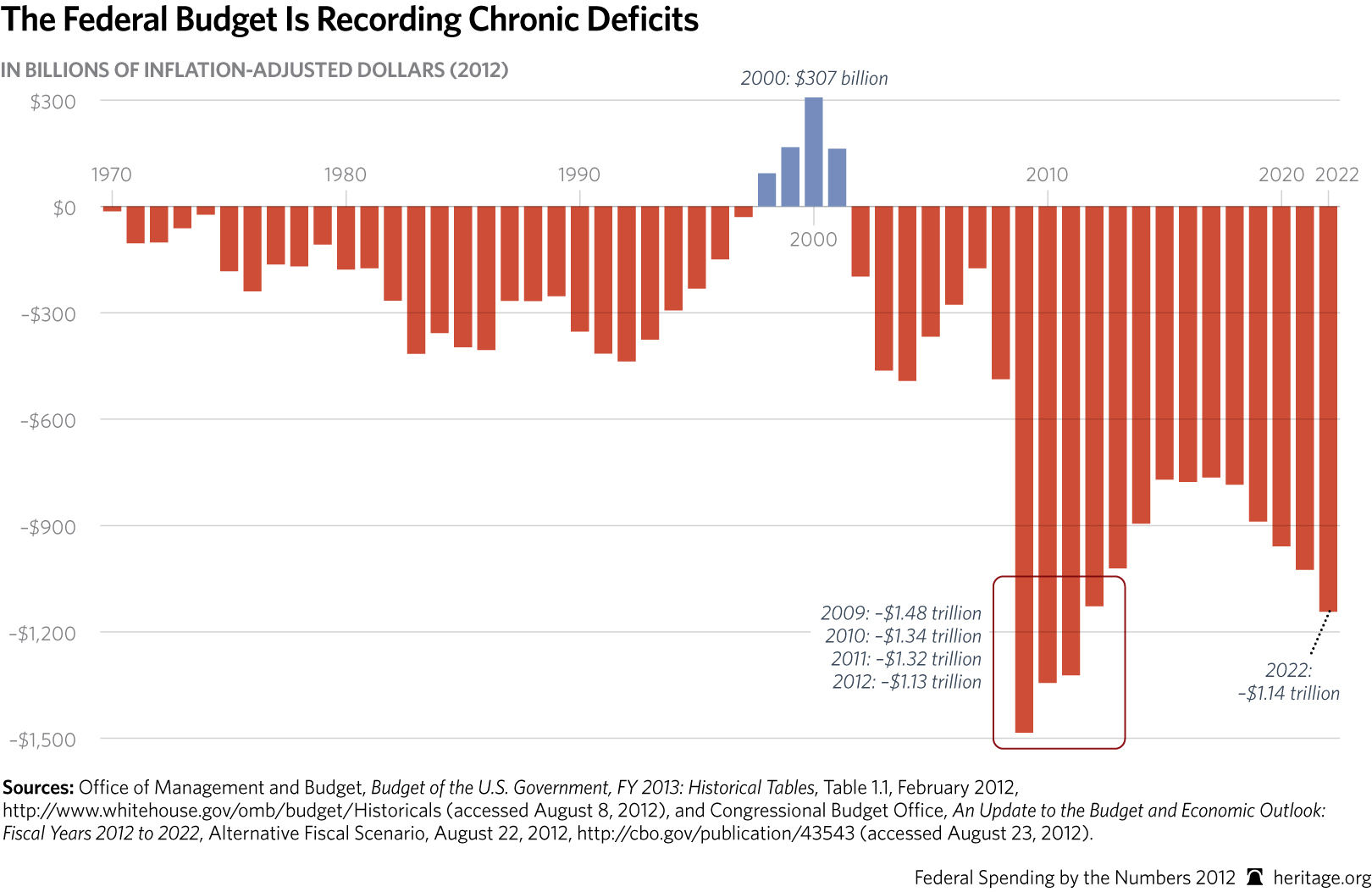
I don't know how much readers know about me. I actually think that the US Federal Debt is the greatest threat to US national security that exists. That said, let's look at it.

Those numbers are the US Federal Deficit, including projections into the "near" future.

Yes. I see the massive deficit spike in 2009 when Barack Obama was inaugurated.

I also see the yearly decline after he took office.

What I don't see is a projection of smaller deficits after Dumb-Ass Trump took office, since he signed a huge tax reduction bill that mostly benefited people who were already doing very well in an already booming economy.

When the economy is doing well, that's when the government should be trying to PAY DOWN the national debt.

Instead, Paul Ryan and Mitch McConnell passed a budget that cuts taxes for individuals and corporations that are already doing great, which increases the federal deficit during an economic boom.

I don't get it.

I realize that Bill Clinton is an asshole on many levels, but at least he had enough sense (from listening to economic advisors like Alan Greenspan) to use the boom economy he was experiencing to pay down the National Debt.

But the controlling Republican party in 2017 decided that a massive tax break for corporations and individuals who were already doing well was more important than reducing the national debt.

My mind boggles.

I generally think of  myself as politically central, but Republican politics seems to only care about the profits of big corporations.

How are we going to reduce the National Debt if we run BIGGER deficits when the economy is doing well?

Fortunately, I'm old. I may not live to see the consequences of the current administration. I grieve for those younger than me, though.

Monday, December 14, 2015

Just a Rifle

Yet again, there's a dubious photo meme going around on Facebook.

Just a Rifle
I'm not going to try to make a case that you should not be allowed to purchase an AR-15 rifle like the one at the bottom of the image. I just want to point out that this whole "just a rifle" argument is disingenous. Rifles have different designs for different purposes, and terminology has adapted to describe those purposes. Not all rifles are made equal.

According to the Encyclopedia Brittanica, an "assault rifle" is a "military firearm that is chambered for ammunition of reduced size or propellant charge and that has the capacity to switch between semiautomatic and fully automatic fire." By design, they are easy to carry, have a high rate of fire, carry a large amount of ammunition in the magazine, and reload quickly by changing the mazagine. The only distinction that the civilian model at the bottom has from a military weapon is that the civilian weapon is not capable of fully automatic fire.

The first (top) rifle in the image is a lever-action rifle. Today, they are designed mostly for hunting at moderate range. Looking at online advertisements, they are available in a wide range of calibers. The magazine typically seems to hold about 10 rounds of ammunition, which would have to be loaded into the weapon individually. The weapon must be cocked by lowering and raising the lever before every shot, which will limit its rate of fire, but if you went on a crazy shooting spree with this weapon, you could probably shoot ten people before you had to stop and reload, allowing potential victims to either escape or attack you.

The second is a bolt-action rifle, also typically used for hunting these days, although military sniper rifles are also frequently bolt-action rifles. Generally used with a scope, they are accurate at long ranges. The World War 2 era rifle that I own myself holds 5 rounds in the magazine; these can be loaded individually or loaded all at once using a "stripper clip" that holds all five rounds together in the right orientation for loading. These rifles typically use a powerful cartridge like the .30-06 round (7.62 mm). The bolt-action must be manually worked before every shot. If this was your weapon on a shooting spree, you could potentially hit from a large distance, but you would still probably only be able to hit a few people before your victims scrambled for cover.

And finally, the third weapon, which is also "just a rifle". The design is military, although the fully automatic fire capability is removed for the civilian market. For the military, it is intended to fire a lot of bullets in a short time at moderate range. As far as I know, civilians typically buy such weapons for home defense, plus just liking the idea of owning such a weapon. The AR-15 fires .223 caliber ammunition (5.56 mm): a small but fast bullet. The civilian model is semi-automatic, loading a fresh round into the chamber after every shot, allowing you to fire as quickly as you can aim and pull the trigger. I found online ads for AR-15 magazines holding anywhere from 10 to 40 rounds of ammunition. By design, the magazine can be detached when empty and quickly replaced with a full one. If this was your weapon on a shooting spree, and you had practiced with it, you could reasonably expect to shoot dozens of people.

I am not against gun ownership. As I said, I have a rifle myself. In it's time, my Mosin-Nagant was a military combat rifle.

I am against bad arguments for anything. Pretending that there is no difference between the three rifles in that picture is dishonest. You don't need 40 rounds of .223 semi-automatic fire for deer hunting; a weapon like the AR-15 is meant to kill people.

Sure, "assault" is an action, but it is also a design specification.

Thursday, November 19, 2015

A Gun for Home Defense

A popular argument against gun regulation is that "good guys with guns stop bad guys with guns" and "we need guns to protect our homes".

According to a study conducted by Emory University, a gun in the house is over 20 times more likely to be used to harm a resident than to fight off an intruder.

Tuesday, September 15, 2015

Pro Life

Donating bone marrow is something that most people can do to save lives. The procedure is done in a hospital and requires the donor to be placed under general anesthesia. Needles are inserted through both sides of the back of the pelvic bone to extract liquid marrow. This liquid is then sent to the patient who requires it. Common side effects include back or hip pain, fatigue, throat pain, muscle pain, insomnia, headache, dizziness, loss of appetite, and nausea. They are generally gone within two days of the procedure. The median time to full recovery for a marrow donation is 20 days, although it can take up to a year. Due to the life-saving benefits and minimal risks of the procedure, donation is mandatory. Effective immediately, all adults shall be required to donate bone marrow as often as possible, unless they have a medical exemption.

Platelet donation is a procedure that can be performed in the offices of a blood donation organization such as the Red Cross. Platelets are often needed for patients undergoing chemotherapy or organ transplants. During the procedure, blood is extracted from the donor, platelets are separated from the other blood components, and the rest of the blood (with some supplementary fluid) is returned to the patient. An anticoagulant is also administered to aid in the collection process. The procedure typically takes about two hours, after which the donor can typically resume normal activity, although they should avoid heavy lifting for the rest of the day. Effective immediately, all adults are required to donate platelets as often as possible unless they are making other tissue donations that would prohibit platelet donations or are medically ineligible to donate.

Effective immediately, all citizens are organ and tissue donors. Upon death, all viable organs and tissues will be collected and sent to waiting patients. Everyone will need to be pretested for organ matching to expedite the process, which will help save people in need of life-saving donations. Participation is mandatory.

When everyone is okay with all of these pro-life policies, we can talk about outlawing abortion. If we are going to require women to donate nine months of their lives to save a fetus while taking the risks associated with pregnancy and childbirth, everyone can take lesser risks to make donations that will save the lives of people who have already been born.

Tuesday, July 22, 2014

Healthcare Costs

Just putting this out there.


Friday, September 20, 2013

Education

This Washington Post article isn't new, but it's been showing up on Facebook recently, which makes it new to me. It describes the experience of an adult on a Florida school board who took one of the standardized tests administered to 10th grade students there (specifically, the Florida Comprehensive Assessment Test).
I won’t beat around the bush,” he wrote in an email. “The math section had 60 questions. I knew the answers to none of them, but managed to guess ten out of the 60 correctly. On the reading test, I got 62% . In our system, that’s a “D”, and would get me a mandatory assignment to a double block of reading instruction.
I was interested to see a 10th grade math and reading test that was so tough that a school board member with "a bachelor of science degree, two masters degrees, and 15 credit hours toward a doctorate" flunked it. I therefore took the reading quiz and the math quiz published with the article, which reportedly use questions from the same student assessment.

I was appalled, not by how hard the test was, but by the fact that someone who claims to have three degrees did so badly on it. I scored 7 out of 7 on the reading quiz and 6 out of 7 on the math quiz, and I do think one of the math questions was poorly designed (it's question number 6 if you're interested, it requires eyeball-guessing the area of an irregular shape).

So how does this school board member react?
I have a wide circle of friends in various professions. Since taking the test, I’ve detailed its contents as best I can to many of them, particularly the math section, which does more than its share of shoving students in our system out of school and on to the street. Not a single one of them said that the math I described was necessary in their profession.
Having flunked an easy reading and math test, he claims that the material isn't relevant. I disagree. The math questions cover basic skills that anyone should be able to do, like multiplication, reading graphs, basic algebra, and simple geometry. This is not rocket science; he should be embarrassed by such a poor score on this test. I don't think he's stupid; I think the real reason for his failing score is that he made no effort at all to work out the answers.
I can’t escape the conclusion that decisions about the [state test] in particular and standardized tests in general are being made by individuals who lack perspective and aren’t really accountable.
Yeah, I think you just described yourself there, dude. If kids are having trouble passing this test in the 10th grade, I don't think it's the test that's the problem: the system is failing to teach them basic skills.

Wednesday, July 17, 2013

The Nuclear Option

Senate Democrats and Republicans managed to find some kind of agreement to vote on Presidential appointments, so Reid won’t be implementing the “nuclear option” today.

Why is it taking so long? I think the “nuclear option” should have been exercised ages ago. What the Senate has right now is not a filibuster: a filibuster requires effort. A filibuster requires politicians to occupy the floor and keep debate open endlessly to keep a vote from happening. It requires the kind of effort that Wendy Davis put forth in Texas and Rand Paul put forth in the US House.

What the Senate has is an “obstruct” button, and it needs to be taken away.

Monday, July 01, 2013

Politics: Tax Policy Revisited

In a previous post I discussed how I would revise personal income taxes, if it were up to me. I also have a few ideas about corporate taxes that I would implement, if I had supreme executive power!

One of the arguments that I hear a lot is that corporate taxes hurt the economy and the people by discouraging employment. The corporations have less money available to them due to taxes, so they have less to put into payroll. I think that can be handled by letting corporations deduct legitimate costs of doing business from their income, payroll being one of those costs. Money that goes to payroll is subject to personal income tax, anyway, so there's no need to "double-tax" it.

Now, I would try to limit that by putting a "salary cap" on the payroll deduction. No more than $200,000 in compensation for an individual employee can be deducted, for example. That should keep the payroll deduction from being used as a tax loophole by giving outrageous compensation packages to executives; they would have to pay a lot of people good salaries to avoid taxes that way.

(Edit: To account for inflation, I think calculated value would be better than a fixed number. Instead of $200,000 as the deduction cap, make it ten times the compensation of the lowest-paid person in the organization.)

Other legitimate costs of doing business would be materials used in making a product, utilities, equipment purchases, and equipment maintenance.

Things I would not include are payments on corporate debt, be they loan payments or buying back stocks or bonds. I just don't want to encourage a lot of borrowing. Stock dividends would also be right out. Payouts to shareholders are things that you do with profits, not expenses.

Charitable spending I would make deductible, but only for the amount that actually goes to charitable work. There would be no such thing as a "non-profit organization" that was untaxed: just money used for charitable purposes that's deductible.

That's what strikes me as a fair corporate tax system that encourages investment and employment and doesn't reward stuffing the bank accounts of corporate executives.

Tuesday, February 12, 2013

Is That A Fact? - Gun Statistics

The Sandy Hook school shootings started another wave of interest in gun control legislation in the United States. Naturally, there are people who oppose tighter gun regulation, and I understand their view point. That doesn't mean I'm going to give them any slack on abusing statitics, though. This image is a recent example from Facebook.


In 1996, there was a mass shooting incident in Australia. It triggered a wave of interest in gun control legislation much as Sandy Hook has done in America. In Australia's case, new gun regulations were passed and implemented in 1997. Anti-Gun-Control activists like to cite some damning (but unsubstantiated) statistics about the effects of those regulations.

What we get are reports like those in the image: lists of percentages with no explanation of where the data was obtained or how the statistics were calculated. A scientific paper would require that kind of information, as scientists expect to be able to check each others' work. A bunch of percentages in a vacuum tell us nothing.

Gun legislation in Australia has been more restrictive than in the USA for decades, and gun ownership rates there have likewise been lower for a long time. The 1997 laws placed new restrictions on semi-automatic rifles and shotguns. Gun violence in Australia was declining before the new rules were passed, and gun violence has continued to decline since. There are disputes over whether the new regulations made a difference, because there has not been a significant change in the rate of decline since their passage.

I don't expect the "assault weapons" ban to have a major impact on gun crime in the USA. According to FBI statistics, rifles of any kind are used in less than 6% of homicides in the USA (this figure includes homicides involving a firearm of unspecified type). The most prevalent weapons by far in homicides in this country are handguns, accounting for nearly half of all homicides.

I'm annoyed with people who share these kinds of statistics, since I'm pretty sure that they don't do even a small amount of fact-checking before they start spreading this kind of misinformation (otherwise, they wouldn't be spreading it). I'm downright angry at the people who initiate this kind of "viral" disinformation, because they are shamelessly lying to people about the effects of gun legislation on society.

Wednesday, January 30, 2013

Politics: The Election Process

I think that the way we choose candidates is one of the biggest problems with our current political system. It’s bad enough that we have a two-party system, but allowing them to choose our nominees from strictly within the parties lends itself to extremism.

As I see it, the party primaries encourage extremism on both sides. The most extreme members of the electorate tend to be the most likely to participate in the primaries, which means that candidates have to appeal to the extremists to get nominated. There were Republican candidates that I actually would have voted for if they’d been nominated in 2012, but they weren’t hardcore-conservative enough, so they were eliminated early in the primaries.

The party primaries always set up moderate, centrist candidates for failure, even though (in my arrogant opinion) the moderates would have far better chances in the general election, where most of the voters are moderate independents. The candidates with positions closest to the general population are always pushed out by the extremists.

The solution I see is to have open primaries instead of party primaries. On a specific date (probably in August), there’s a general election, and the two candidates with the most votes go to a run-off in November. If someone gets more than half of the votes in the primary, there’s no need for a run-off; that position is already decided.

The open primary would force candidates to try to appeal to the entire electorate during the “primary season”, instead of trying to appeal to the subset of their own party that they consider most likely to get them nominated, and I think that would result in better elected officials.

Friday, August 10, 2012

Jury Duty

I got picked for jury duty along about the beginning of August. Lucky me, I was seated on a jury the first day I was required to be present. Note that, in my county, I'm on call for two months. I check with the county clerk to see if I need to be present on any given morning; there are multiple jury panels, they tell us which panels need to report on any given day. Panels get called up for jury selection, and jurors who aren't seated can go to work or home or wherever they normally go during the day. Jury selection will typically eat up all morning, even if you don't get picked.

So I got seated on my first reporting day for a criminal trial. It was a multi-count indictment.
  1. Aggravated Burglary: Using a firearm in the commission of a felony in a residence.
  2. Aggravated Assault: Using a firearm in an assault, which is harming someone or causing someone to be in fear of imminent harm.
  3. Aggravated Domestic Assault (3 counts): Using a firearm in a domestic assault, which is an assault where the victim is a family member.
  4. Aggravated Animal Cruelty: Causing needless harm to a companion animal.
There were a couple of additional charges, but I've let this wait long enough that I don't remember every one.

Basically, a man was charged with going to the home of his ex-wife and their children and shooting his way in with the intent to at least threaten and possibly harm one or all of them. He was also accused of shooting the family dog while there. The ex-wife, daughters, and a house guest hid in the bathroom when he arrived and started shooting the door until the lock broke. They said they saw him walk by the bathroom door (which was ajar), and then heard him moving into the far part of the house. At that point, they ran out the back door to a neighbor's house.

The eldest daughter had been on the phone to 911 since he first arrived at the house and started knocking on the door, claiming to be a sherriff's deputy. No one was fooled by that, and they went into hiding before he started shooting his way in.

He apparently gave up and left the house, heading back to his car, because a deputy sheriff intercepted him on the way to the car. He was detained and then arrested. The family was told they could return to the house. While gathering things they needed to spend the night at a friend's house, they found the dog shot.

The district attorney provided ample evidence that the man had gone to the house with a gun and performed the various acts described. The defense didn't make any serious attempt to challenge that evidence. The defense case hinged primarily on whether he performed these acts "intentionally or knowingly".

The suspect had a history of substance abuse, although he had been through clean periods in his life. He had, reportedly, been clean for about nine years before going to a clinic and being prescribed anti-depressants. The medications, according to the defense, were strongly contra-indicated for someone with his medical (alcohol and drug abuse) history, and they triggered a substance abuse relapse. Consequently, they argued, he was not in control of his actions at the time of the events of the case.

The instructions that the judge gives the jury after closing arguments are ironically simple. A charge has a number of elements. If all of the elements have been shown by the prosecution beyond a reasonable doubt, the jury must find the defendant guilty of that charge. If any of the elements has not been shown beyond a reasonable doubt, the jury must find the defendant innocent.

That the defendant was there and did the alleged things was never in doubt. Whether he did these things knowingly or with intent was the question.

To do these things, he had to get a rifle (which he identified to the deputies who arrested him as belonging to his "girlfriend"), load it, put it in a car (along with a box of additional ammunition), drive from another county to his ex-wife's home, park down the street, walk to the house, lie about his identity when knocking, very systematically shoot around the dead-bolt lock until it failed, and then kick the door open, enter and wander through the house looking for inhabitants, shoot the dog (which showed no evidence of hostility), leave the house, abandon the rifle in a ditch, and then head toward his car to leave.

He never actually saw his ex-wife or any other person at the house, so the defense did ask whether he could be "intending" to assault someone he never actually saw, but do you really drive to someone's house from another county with a gun "intending" not to find them at home?

No. He had a plan (if not necessarily a good one) to go to his ex-wife's house to threaten or harm her. If you put a shot of whiskey in front of him and told him not to drink it, I might excuse him for giving in to temptation, but what he did went far beyond what his addiction might compel him to do.

So a man is probably going to prison (the jury is excused before sentencing, I don't know exactly what penalty he will get), in part because of me.

Not a good day, really. A lot of things went terribly wrong for a family. I hope they recover from it.

Wednesday, April 18, 2012

Politics: Tax Policy


It looks like tax policy is shaping up to be a big issue this election year (which is rather typical, really), so I figured that I might as well address it. I’m long overdue for posting something around here, anyway.

I’m fiscally conservative in the sense that I don’t think the government has any business spending money that it doesn’t have. The US has been borrowing like crazy since the 1980’s, only running a surplus briefly during the late 90’s before going back to deficit spending after 2000. Based on that spending pattern, you can see why I don’t really consider the Republican party to be a bastion of fiscal responsibility.

I’m not particularly in favor of “soaking the rich” to fund the government. I do think everyone should be helping pay for the services we expect of the government. I think everyone should have basically the same tax rate, so there should be no need for a “millionaire surtax” or the like. If we’re going to have an income tax (and I don’t see that changing), we should have an income tax. I don’t care whether you get your income from a salary, selling widgets, collecting interest, or playing stocks; no matter where your money comes from, it should be taxed at the same rate.

On the other hand, I don’t see the sense in trying to get tax money from people who don’t have any to spare. Our current tax system recognizes that there are certain basic living expenses that should be deducted from your income before your tax is calculated.

So my idea of a fair tax is one where everyone’s income is taxed at the same rate, and everyone gets the same cost of living deduction. I don’t necessarily know what that should be, other than it should be the least amount you can reasonably expect to live on; it may even have to vary somewhat by location (although if you have more than one residence, you only get one cost-of-living deduction, for the lower of the two locations). Note that this means the effective tax rate for a low-income person will be less than the effective tax rate for a high-income person.

If you have a domestic partner (who can get “married” is another post), then you can effectively combine your two deductions, so you don’t take a big tax hit if one of you is a stay-at-home parent. I'm not sure how I feel about additional deductions for the children.

And that’s all: one tax rate for everyone, one deduction for everyone. What the rate should be and how much the deduction should be would both need to be determined based on the needs of the nation and what the people will accept; the main restriction being that the revenue should be enough to pay for all the services plus bring down the national debt. Both the rate and the deduction can be easily adjusted by Congress, if necessary.

Monday, January 16, 2012

Politics: Healthcare

Given what the Republican candidates have been saying about “Obamacare”, I figure now is as good a time to vent some ideas regarding how Americans, as a society, view health care and how the costs should be paid.

On one hand – we’ll call it the right hand – you have the conservative/libertarian notion that paying for health care is an “individual responsibility”. This is the “private sector” system where people with health issues (be they diseases or injuries) pay the provider (doctor, nurse, hospital, clinic, or whatever) for whatever they need to make them healthy, or at least keep them going.

On the other hand – which we’ll call the left – you have the liberal/socialist notion that health care is a right, and everyone (via taxation) pays into a national system that provides everyone with the health care services that they require.

Those are the extremes, of course. What we have now is somewhere in between, as purchasing insurance is something of a compromise between the right hand and the left hand. We’re not completely averse to a “socialized” medical system. After all, a health insurance company can only charge a “reasonable” premium if there are plenty of healthy people on the rolls paying premiums without getting many medical services. They need to have lots of people who are paying more than they cost in health expenses to cover those who are paying less than they cost, especially if they want to make a profit. That’s why insurance companies lobbied for that clause in “Obamacare” that requires everyone to buy some kind of health insurance.

But I want to consider another way of looking at healthcare. Just for a moment, let’s look at health care the way we look at police protection and fire protection.

If you look at them from the “right hand” perspective, then police protection is a service that has a cost, as is fire protection. If you call 911 to get a response to a burglary or a fire, the dispatcher will ask you how you plan to pay for the police car or fire truck that will be sent to your home. In the extreme-right scenario, they won’t come at all unless you assure them that you can and will pay them.

From the “left hand” perspective, the police department and fire department are government services, and the salaries of the officers and the costs of their equipment are paid for by everyone’s taxes. Surprisingly, that sounds an awful lot like what us capitalists already expect.

If you look at health care the same way, then doctors are government employees with salaries (good ones, I should think, given the many years of education they need), and the machines, hospitals, medicines, and so forth are government expenses paid for by taxes. Sounds terrible!

Except for the fact that no one has to pay insurance premiums or copays or doctor bills.

“But health care under a single-payer system will be inferior and rationed!”

I guess that depends on whether we’re all willing to pay enough into the system to still have top-level health care.

I expect to get lots of feedback on why both scenarios suck, but I bet that most of it will be conservative/libertarian “why socialized medicine sucks” posts. It will be interesting to see if they have objections that I haven’t considered.

Sunday, January 08, 2012

Dollar Coins

This may be old news, but the issue of the Presidential dollar coins that are piling up in government warehouses just keeps bugging me, so I'm finally going to clear the air on it.

The government keeps trying over and over again to introduce dollar coins into the currency system, the reason being that the useful life of a coin is vastly longer than the useful life of a paper bill, so changing from paper dollars to coins would be a long term savings for the treasury department.

The problem is that coins are different. People don't really like changing the way they do things, so there is inevitable resistance. The Susan B. Anthony dollar didn't see widespread use, nor the Sacajawea dollar, nor the Presidential dollar coins.

And the reason that these coins aren't catching on is simple. The idiots in the government keep printing paper dollar bills. Get a clue, guys! If you want to make a switch from bills to coins, make the switch. Stop printing the bills and start taking them out of circulation. People will adapt, even if they're resistant at first.

Of course, I happen to like the things, so no one will appreciate my opinion.

Tuesday, August 02, 2011

Politics: Deficit Reduction

Well, the stooges in Washington are patting themselves on the back for averting the crisis that never should have been a threat if they'd been doing their jobs, so maybe they can get around to some real work, now.

I can sympathize with the deficit hawks, since I too think that Congress (which really controls the purse strings) has been living like a kid with daddy's credit card for far too long, and a string of Presidents have been letting them get away with it. Adding services and lowering taxes look good for you at election time, but it racks up debt like crazy, and before someone accuses me of being a wacky conservative tea-bagger, I blame Ronald Reagan for this mess. He was the one who made it okay to raise the budget while lowering taxes and keep it up year after year. He thought he'd be able to cut back the entitlement programs like the modern tea partiers, but he was never able to pull it off. Good luck, ya mooks.

Anyway, I see a series of things that need to happen now.
  1. Set a binding rule (with like a 2/3rds majority needed to break it or something else atrocious) that there can be no new spending programs and no expansion of existing programs as long as we're carrying a debt. That means that existing programs can't offer new services or reduce the qualifications to be enrolled.
  2. Go through the various Federal programs, especially the big entitlement programs, and decide how much needs to be spent on them. Cut if you think the country will tolerate it, make each one as efficient as possible, vote, and move to the next one.
  3. Determine how much all of that is going to cost.
  4. Revise and simplify the tax system, creating a revenue stream sufficient to pay for everything, plus enough extra to actually start paying down the debt.
  5. When the economy recovers, keep the tax rates the same. Don't squander good times by cutting back the revenue stream; work on the debt hardest when you're in the best position to do so!
Yeah, it may result in some higher tax rates, but it's got to be done. I'm willing to take that hit myself to see it happen. I don't have kids of my own, but I've got nieces and friends with kids, and I don't want those kids to have to deal with our crap.

Basically, if you don't have the guts to cut the budget (and I really don't think they do), at least have the guts to raise enough money to cover it.

Thursday, June 23, 2011

Marriage Making News Again

This time, the state of New York is trying to pass a bill to legalize same-sex marriages.

I may have mentioned this before, but I think they’re approaching this issue in the wrong way.

For starters, the definition of marriage isn’t as universal as social conservatives would like you to think, which raises problems beyond just same-sex marriage. For instance, if we make the one-man/one-woman marriage the legal standard, what happens to immigrants from countries where plural marriage is legal? A man with two wives and six children (all done very legally in his country of origin) immigrates to the United States (also legally): is he still married to both of his wives? There are even religious sub-cultures in the US that aren’t opposed to plural marriage: at least in private; they may publicly disavow it because of the majority opinion.

There are also issues of free speech and freedom of religion to consider. If a same-sex couple goes to a church, synagogue, temple, or other religious institution and takes the appropriate vows, there’s nothing that the government can do to stop them from calling their relationship a “marriage,” no matter how many common legal privileges it chooses to deny them. The Constitution won’t allow the government to keep the church from performing the ceremony, and it also protects their right to describe the relationship as they choose.

So I think the government should get out of the “marriage” business entirely: they really have no interest in anything but “civil unions,” and I think there are valid reasons to limit those to simple contracts between just two people: the tax code, for instance, would get even messier if a union could consist of any number of husbands and wives.

So the solution is simple. The government should stop trying to define “marriage” and just define what rights and responsibilities are attached to a “civil union” contract, without restricting who can enter such a contract beyond “two consenting adults.”

Tuesday, May 31, 2011

The Concept of Managed Care

I was listening to talk radio on my way home this evening, as I occasionally do to keep awake, and I heard Phil Valentine discussing the ever-present issue of healthcare. He was dissing the very concept of managed care.

The gist of his argument went something like this: "Joe Blow needs procedure X. Either Joe or the insurance company he pays (or the government entity that subsidizes his health care, although that's un-American) needs to pay for procedure X that Joe needs. The Guvmint shouldn't give Joe's healthcare providers a fixed amount of money to cover his healthcare needs and certainly shouldn't have the ability to say, 'Joe, the cost of your procedure exceeds the limit the Guvmint set, so we're cutting you off.'" All this was in response to a statement from some Democrat who thought it a reasonable idea that the "Guvmint" should offer a provider a fixed amount to cover a patient's health expenses for a period of time (like a year).

Phil apparently isn't even trying to understand the concept of managed care. I happen to work (indirectly) for a "Payer" that makes contracts with managed care organizations (MCOs), so I have an idea what he's missing.

The principle of managed care is to keep the "enrollees" or "patients" of the managed care system healthy. The MCO enters into a binding contract to pay for a patient's medical needs for the duration of the contract. That's an important point: the MCO must pay for all medical procedures that the patient needs.

The Payer in this system gives the MCO a certain amount of money for the patient for a specific period of time, usually a year. The amount can vary, depending on the patient's age and any pre-existing conditions of the patient (such as diabetes or just age), but the MCO gets this amount regardless of the actual cost of procedures that the patient needs during that period of time. Note that, due to the contract, the MCO must pay for the patient's medical needs, even if the cost exceeds the amount paid by the Payer.

Obviously the MCO will lose money if the cost of a given patient's care exceeds the amount it receives from the Payer. This means that the MCO has an economic incentive to keep the patient healthy. This is how a managed care system uses the free-market forces that Phil adores so much to control costs. The MCO wants to enter the contract to get that "money per patient payout" from the Payer (the "Guvmint" in this case), but the MCO doesn't want to pay for expensive medical procedures for a patient, like a hospitalization. If the MCO can keep the cost of a given patient's care below the annual payment from the Payer, it makes a profit. If it can keep the overall cost of patient medical expenses below the overall payment for all patients, it makes an overall profit on its contracts.

Consequently, it's in the financial interest of the MCO to monitor patients and address any potential health problems as early as possible, before they develop into serious problems that require an expensive hospital stay. That is how managed care systems that provide fixed amounts of money for patients save money for the Payer.

Compare this to a Fee For Service (FFS) system, such as Phil proposes, in which the Payer picks up the bill for every procedure a patient needs. In an FFS system, the incentive for the provider is to maximize the number of billable services for the patient. If the patient has a developing condition that could be treated cheaply if treated early, the provider actually has a financial incentive to wait until the condition becomes more serious, so they can charge the Payer for more procedures and more expensive procedures to treat it.

I hope it’s clear now why an MCO system is at least potentially more economical for the Payer than an FFS system. Certainly there are potential abuse issues in an MCO system (such as disputes over whether a particular procedure is “needed” for a particular patient and arguments over what the annual payment for a given patient should be), but the underlying principle of an MCO system is to encourage providers to keep patients as healthy as possible, so they don’t need expensive procedures. Whatever it is, it ain't "evil socialism."

Thursday, September 23, 2010

No... No Way!

Apparently some countries want to negotiate a "cyber peace treaty" that would effectively prevent people from posting internet content that criticizes their government.
Using the term "mass psychologic [sic] brainwashing," the agreement said that the dissemination of information "harmful to the spiritual, moral and cultural spheres of other states" should be considered a "security threat."
Sounds like tyrants want to make it illegal for anyone in another country to point out their tyrannical policies. Technically such a treaty would only bind the government itself, but I suspect the countries pushing this "treaty" (including Russia, China, India, and Brazil) are just trying to get a foot in the door for suppressing all internet criticism.

I do hope our representatives have sense enough to know that our Constitution forbids signing or ratifying such a treaty.

Thursday, June 04, 2009

Something to Keep in Mind

"All, too, will bear in mind this sacred principle, that though the will of the majority is in all cases to prevail, that will to be rightful must be reasonable; that the minority possess their equal rights, which equal law must protect, and to violate would be oppression."
--Thomas Jefferson